Companies and individuals are leaving China, and there are legitimate reasons for doing so. But generally this doesn’t hurt China as much as it hurts foreign countries. Two stories this month—Japanese companies exiting, Xi’s invitation to 100,000 young Americans--are basically two versions of the same story: How to live and work in China.
Issue #1. The China Exodus Continues—Japan 2026 is Western companies’ 2018 redux.
Japan in 2026 is having the same realization many in the US had starting around 2017–18: China was not nearly the opportunity they had thought a decade or so earlier. That collective new understanding—from the military, to academia, to business—saw foreigners and their companies leave China. Covid accelerated the exodus, and Westerners largely haven’t returned. Today the largest foreign populations in China are Burmese, Vietnamese, and South Korean. By some estimates, as much as 75% of the Western foreign population has left China and not returned.
Chinese professionals effectively and competently replaced their foreign counterparts. And while China still hasn’t been replaced as the factory of the world, more and more of what it manufactures and exports are Chinese brands.
The Japanese are now accepting that China’s political, economic, nationalistic, and industrial environment are riskier than its potential economic value warrants—the very deal that kept foreigners in China for the last 35 years. Add in the reality that many Chinese brands are now strong competitors to previously superior Japanese brands, and Japanese companies are exiting in increasing numbers every year.
The irony: as Japanese companies leave China, Chinese families are moving to Japan in droves to enroll their kids in international schools—buying houses, starting small businesses, and creating “Chinese” neighborhoods that tend to conflict with traditional Japanese norms.
China is a dominant competitor at home, and increasingly a presence to be dealt with abroad as well. But working an living in China is no longer either profitable or manageable for many from other developed countries. Companies and individuals need to assess why exactly they are going to China and what risk there are and if their job can be done in China by Chinese instead. Some things require specific skills or experience that maybe only some specific person in the foreign company has. And some supply chains are only in China.
Issue #2. Should students study in China? Xi’s 100K invitation splits the China-watching community.
Since Xi invited 100,000 young Americans to China for exchanges and study over the next five years, hundreds of China experts and watchers have weighed in on what US students should or shouldn’t do.
There are three general camps:
• Don’t go! It’s dangerous, and we can study China from abroad just fine.
• Go, but be (formally) prepared and very cautious.
• China is wonderful and so safe!
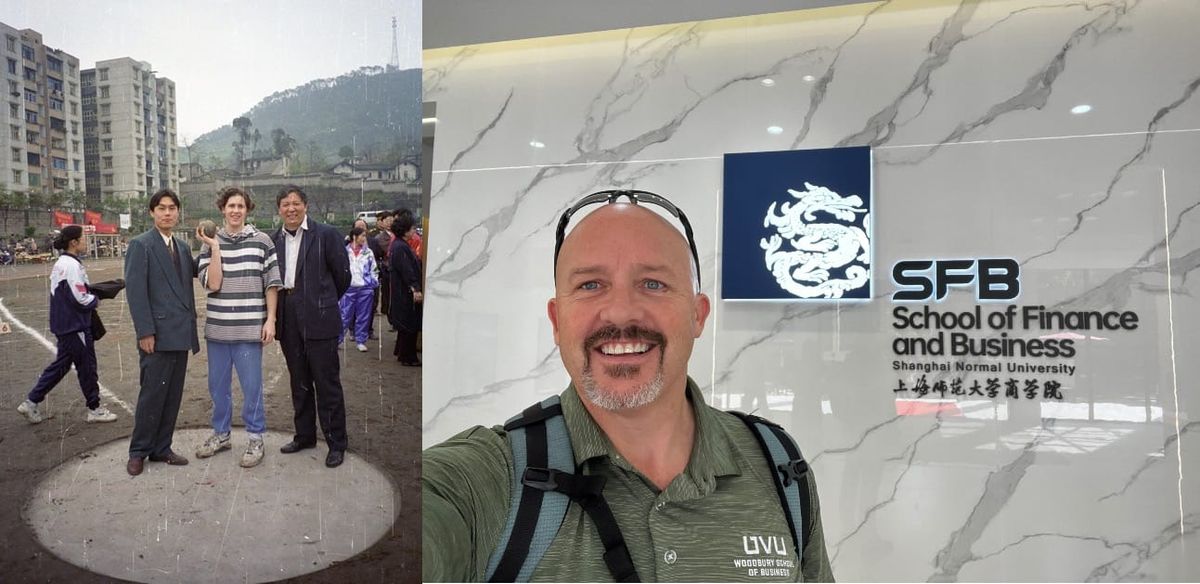
I know what it’s like both to study and to teach at Chinese universities. After living in Thailand in the late ’80s, I started studying China as an undergrad. I moved to a university in Chongqing in 1995 for a year, then to Taiwan in 1999 for three to try to learn Mandarin on my own, then back to China in 2002 to do supply chain management for a decade, to Taiwan again in 2015 for a semester of language study.
For my PhD on Chinese corporate cultures, I spent more than a year working in Chinese companies and doing field research in Shenzhen and Bangkok. Since graduating, I’ve taught at business schools in the US, Shanghai, Wenzhou, and Bangkok.
China can be scary, threatening, fascinating, exciting, dangerous, physically safe, and important all at the same time. There are as many versions of “what China is really like” as there are people with experience in China. Which one is “real”?
My version: I’m very wary of China as a political entity. I’m also very grateful to China for my family, my education, and my career. I recently left China to work in Thailand, but I have family living in China, and without access to China I wouldn’t have much of a business. I’ve been explicitly censored by employers, invited to tea by local security, threatened with visa revocation by Shenzhen officials, and told to leave China because “China is for Chinese” by random people on the street.
Multiple universities have explicitly told me I cannot talk about Taiwan, Tibet, Tiananmen, Xinjiang, or religion in any way or at any time. Last year, foreign employees at my university were specifically told they were “not to say good things about Japan” and to “not celebrate Christmas in any way.” We could’t even say Merry Christmas.
In one university meeting I was told, “We know everything you buy, everything you view, everyone you talk to, and everywhere you go. We have WeChat.” Orwell has nothing on China.
But I go back annually, and I will continue to do so.
I agree with people saying that China is risky, but it's not too risky to stop all educational trips. The number usually cited, 200-300 US citizens detained in China, has been relatively the same for the last 25 years. And despite the current detention of two US academics in China (very problematic and scary), there are currently no US students detained in China; reports show that even when there have been detentions of US students in the past (NYU in 2021), they usually result in quick releases with no further issues.
My position on the 100K students: The US government allowing students to go to China is not the US government risking the lives of American students. There are plenty of countries much deadlier than China that are still options for work and study for Americans. Having said that...
China is indeed dangerous for multiple reasons, but physical safety isn’t one of them. Ironically, China is Orwellian to such a degree that it’s very safe—likely physically safer than almost anywhere these students are coming from.
Two important caveats to this physical safety generality—if you’re either ethnically Chinese or actively studying issues in China that the Chinese government considers sensitive then you are NOT SAFE. Period. Do not go to China if you’re in either of these categories.
Three Concerns About Students in China.
#1: Personal and data security. Students coming from the US need to understand that they are not free in China—not free to speak, to gather, to worship, to write, or to surf the internet. Enforcement of Chinese standards (not necessarily just “laws”) can include confining students to campus, limiting their movement within the country, expulsion, or even exit bans or arrest.
Phones and computers will be accessed at will, and it should be assumed that all communications and online activity will be monitored 24/7.
All personal relationships (platonic or otherwise) will be analyzed for their value or threat to the State. People you know will be assigned to monitor and report on your activities.
The longer-term problem is that contact information, internet activity, personal friendships, and other connections will likely be kept alive and monitored for years to come. Student-age young adults may not be valuable now, but the Chinese-speaking, China-friendly professional adults they grow into will be. And that’s who China is targeting—the future.
#2: Propaganda and influence operations, including honey traps. Every single student will be vetted and their history and online presence will be scanned. They’ll be monitored on and off line 24/7. They’ll be taught that everything in the PRC is wonderful, and they’ll be shown only places that confirm that vision (delusion?). They’ll be treated to meals and events and introduced to friends, both operational and otherwise. They’ll be supported in their efforts to speak in public and promote their experience in China, Chinese universities, and study-in-China programs. These efforts will begin in China but continue through alumni events, holiday celebrations, and requests for support (“Will you speak at this event?”) and information exchanges for years to come.
The real concern is that you’ll never know who was targeted or whose love for China is organic. And you’ll never know when China has lost interest in a former student. That veil of suspicion will hang over them for the rest of their lives, and any value they might have had as future government employees will be questioned—destroying one of the most important reasons for sending students there in the first place.
So: students need to be rigorously trained, prepped before they leave, and tracked by and registered with the US embassy while in China—just like the Chinese embassies do to their students in the US. Any US university with students in China needs a representative in each city, if not on each campus, where they have students, especially if there are minors. Ideally, US schools would issue students clean kits and allow them to use only “clean” electronic devices in China. And there should be ongoing briefings and trainings for students while in China.
Regardless of the risk, experience on the ground will continue to be the key to business, education, and politics. How do you get that if you’re not there? You can’t.
Conclusion
Paul Weedman on LinkedIn shares the story of meeting a man in Poland who apparently knew all about China, though he’d never been there. Of course some things were correct—the guy had worked with Chinese suppliers for decades. But much was off too. You can only know so much from books, phone calls, and internet videos.
The better version of that story is Fiona Koh’s account of her day job as a go-between for Chinese companies trying to work globally. I’ve been bullish on this space for years. As I’ve said before, most Chinese companies are global but not yet international. Their quality is excellent, they’re available everywhere, and they’re often cheaper than international rivals, but their corporate interactions with foreigners and foreign cultures is still developing.
That’s the answer to the student question above. As Chinese companies go out and learn about the world, they will give China a decided advantage over countries that restrict their students or industries from going to, and competing with China IN China.
China is not backing off from the world’s markets and they’ll gain advantages accordingly. The question is whether backing off from China is going to help or hurt the US and other countries considering the same move (I’m looking at you, UK).
Member discussion: